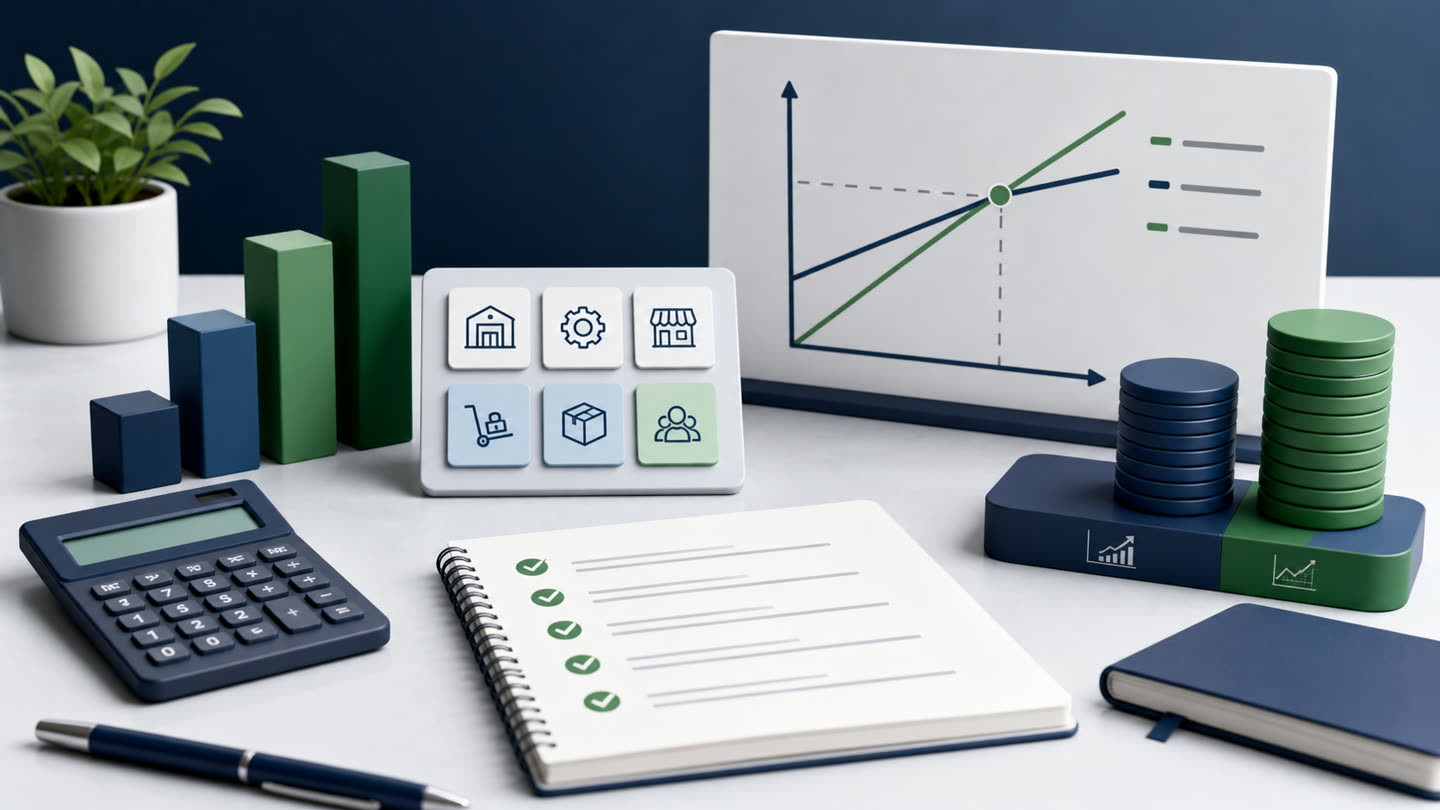
Startup cost planning is more than adding up opening expenses. A lender also needs to understand how much cash the business needs before it can support itself. That means separating one-time startup costs from ongoing monthly expenses and comparing both against expected sales.
One-time costs may include equipment, lease deposits, buildout, initial inventory, licenses, professional fees, signage, technology, and opening marketing. These should connect directly to the use-of-funds section so the loan request and startup budget tell the same story.
Ongoing costs include rent, payroll, insurance, utilities, software, advertising, loan payments, supplies, owner draws, and other recurring obligations. Even if the business is already operating, a new location or expansion can create a new set of monthly costs.
Break-even analysis helps explain the sales level needed to cover those costs. The simplest version identifies gross margin, fixed expenses, and the amount of revenue needed each month before the business is cash-flow positive.
This does not replace detailed projections, but it gives the projection workbook a reality check. If the plan requires sales to double immediately, the assumptions should explain why. If the ramp-up is gradual, the business may need enough working capital to cover the gap.